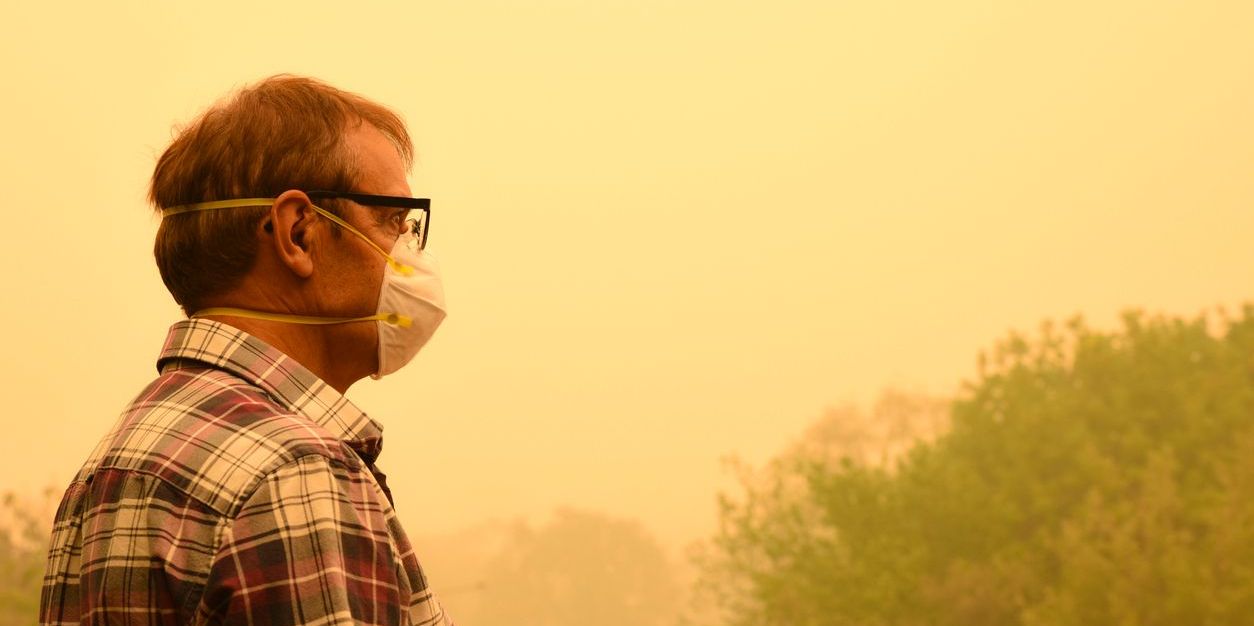
Summary: Yes, during wildfire season in California, increases in wildfire smoke parallel increases in emergency room visits for mental health reasons.
Key Points:
- This article reviews recent research published on the impact of particulate matter from wildfire smoke on mental health during the 2020 California wildfire season.
- In some cases, wildfires are natural disasters, which are categorized as traumatic events, and can lead to depression, anxiety, and PTSD
- The presence of increased particulate matter from wildfire smoke was associated with increased mental health problems during the 2020 wildfire season.
Wildfires in California: A National Tragedy
In early 2025, the entire nation watched in horror as the Palisades fire raged on for 24 days, killing 12 people and causing millions of dollars of damage along the beaches and hills between Pacific Palisades and Malibu, California, one of the most idyllic and well-known stretches of coastline in the U.S. and possibly the world.
It’s well-known among mental health providers that natural disasters – including wildfires – are associated with negative mental health consequences. That’s because living through a natural disaster is a traumatic experience, and traumatic experiences can lead to mental health disorders such as anxiety, depression, and post-traumatic stress disorder (PTSD).
Among natural disasters, wildfires often occupy an atypical category: since they may last for days or even weeks, the trauma caused by wildfires may be considered ongoing and complex. Traumatic experiences in that category – ongoing and complex – can lead to more severe mental health consequences than natural disasters of shorter duration.
However, it’s important to understand that most natural disasters include an element of complexity onlookers often fail to consider. After the disaster itself, the rebuilding, recovery, and regrouping period is often traumatic, too. As victims work to put their lives back together, the trauma of the initial event, combined with the stress of restoring a new normal, can create serious emotional and psychological issues that it may be difficult to address without professional support.
With that in mind – specifically thinking about the Palisades fire of 2025 – we’ll examine a study on the impact of wildfire smoke on mental health during the 2020 California wildfire season.
The 2020 Wildfires in California: Looking Back
As we mention above, the Palisades fire burned for 12 days with devastating consequences, up to and including loss of life. From afar, it looked apocalyptic. The fire burned close to 24,000 acres of land and destroyed close to 7,000 structures, making it the worst fire in the history of Los Angeles and the third-most destructive wildfire in California history.
In comparison, the 2020 wildfire season was the most severe recorded. Close to 3/4ths of the population of the state experienced unhealth wildfire smoke for more than 100 days. During the season – May through December – a total of 98 wildfires lasted an average of 48 days each, and each burned an average of 1,000 acres each, with over a million acres destroyed.
We compare these facts not to compare traumatic experiences, but to remind people of the significance of the 2020 fires, and to point out an important fact. While most studies on the mental health impact of wildfires focus on the event itself, including the trauma associated with loss of loved ones, personal life-threatening experiences, lost homes, evacuation, and recovery, only one study has examined the association between wildfire smoke and mental health.
The study we refer to in the introduction of this article – Fine Particulate Matter From 2020 California Wildfires and Mental Health–Related Emergency Department Visits – poses this research question:
“Is there an association of wildfire-specific fine particulate matter (PM) exposure with mental health–related emergency department (ED) visits during wildfire seasons?”
To conduct the study, researchers gathered data from the California Department of Health Care Access and Information (HCAI) on emergency department visits (ED) related to mental health, but unrelated to COVID-19, between July and December 2020, for the following reasons:
- Any mental health issue
- Psychoactive substance use
- Non-mood related psychotic disorders
- Anxiety disorders
- Depressive disorders
- Other mood disorders
Let’s look at what they found.
Wildfire Smoke, Mental Health, and the 2020 Wildfire Season
First, we’ll share the overall statistics on emergency room visits (ED) for mental health reasons between July and December 2020. Overall, there were 86,609 ED visits for mental health reasons. Here’s the demographic breakdown of those visits:
- Average age: 38
- Gender: 46.5% female
- Race/ethnicity:
- White: 40.6%
- Hispanic: 34.7%
- Black: 12.3%
Now let’s look at the relationship of total fires per month and total ED visits for mental health issues during those months:
July:
- Total fires: 16
- ED visits for mental health: 16,508
August:
- Total fires: 41
- ED visits for mental health: 16,486
September:
- Total fires: 40
- ED visits for mental health: 15,586
October:
- Total fires: 26
- ED visits for mental health: 14,962
November:
- Total fires: 23
- ED visits for mental health: 12,442
December:
- Total fires: 10
- ED visits for mental health: 10,625
As these data show, there’s essentially a dose-response relationship between wildfires and ED visits for mental health reasons: ED visits for mental health reasons increase as wildfire frequency increases. And upon closer examination, the research team identified the prevalence of the following subtypes of mental health issues reported:
- Anxiety disorders: 30.8%
- Psychoactive substance use: 27.6%
- Non-mood related psychotic disorders: 19.3%
- Depressive disorders: 12.0%
- Other mood disorders: 6.2%
Alongside this data, the research team collected data on the relationship between the concentration of harmful particulate matter (PM) in wildfire smoke and specific mental health disorders. Peak particulate matter (PM) recorded as 11.9 μg/m3al during the 2020 season, with a 10-μg/m3 increase in PM associated with ED visits for:
- Other mood disorders: 29% increased risk
- Depressive disorders: 15% increased risk
- All mental health disorders: 8% increased risk
- Anxiety disorders: 6% increased risk
In addition, the research team identified elevated risk among certain demographic groups:
- Non-Hispanic black: 135% increased risk for other mood disorders symptoms associated with wildfire PM
- Young people (18 and under): 46% increased risk for other mood disorder symptoms associated with wildfire PM
- Hispanic: 30% increased risk for depressive symptoms associated with wildfire PM
- Females: 17% increased risk for depressive symptoms associated with wildfire PM
We’ll discuss these results below.
Wildfire Smoke: Impact on Mental Health Varies by Disorder and Demographic Group
The results show that when wildfires occur, trauma directly associated with the event and trauma associated with recovery from the event are not the only sources of mental health disturbance. The research team showed that as particulate matter in wildfire smoke increases, visits to the emergency room for mental health reasons also increase, with anxiety the most common category of mental health symptom reported.
In addition, the research team identified increased risk among several demographic groups, with black people, young people, and Hispanic people showing the greatest increases in relative risk. Here’s how the study authors characterize these results:
“We observed positive associations between wildfire smoke (PM) and any mental health disorder, depression, and other mood-affected disorders…analysis suggested that individuals from minoritized groups may be more vulnerable to wildfire smoke. These findings highlight the importance of addressing racial disparities in air pollution and mental health outcomes.”
These findings also remind us that the people who developed mental health issues during and after the 2020 wildfire season may still experience the consequences. Those who received professional treatment and support may have processed their emotions in a healthy manner, while those who didn’t seek or receive professional support may still be experiencing the negative consequences of that significant trauma.
In California, we need to remember this every year: during and after wildfire season, people may need enhanced mental health support. And finally, in our state, we need to recognize the outcomes in this study related to the social determinants of health (SDOH): traditionally marginalized groups showed an increased risk of depressive disorders and other mood disorders. Both outcomes have meaning, and both help us by reminding us of who’s most vulnerable, why, and when.

 Gianna Melendez
 Jodie Dahl, CpHT